Trust a more informed palate
Why a Sommelier Recommendation Is Not a Price Signal
A good sommelier can make a sharper recommendation because they know the dish, list and stock. That does not make the most expensive bottle the one the service is trying to sell you.
Asserted
“If the sommelier recommends it, they are moving the expensive bottle.”
Corrected
Sommeliers' list-building and service role meets wine trade's allocation economics at the point where a recommendation must balance a guest's dish and budget against finite restaurant inventory.
What to do
Give the sommelier a price ceiling, the dishes and whether acidity, fruit or body is preferred; ask for two options and choose after a 30 to 50 mL taste where service permits.
Thomas studied the prices as though they were motives.
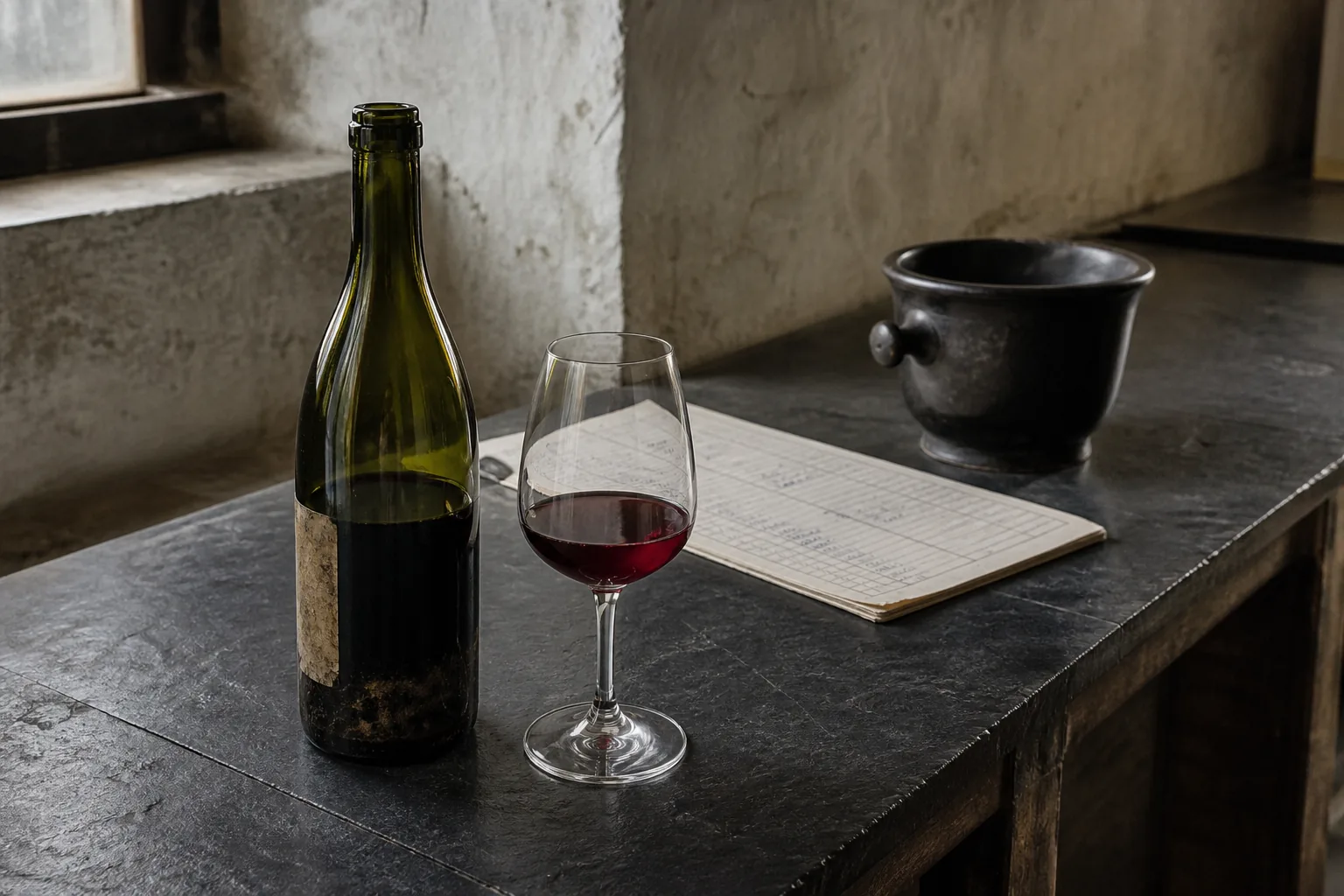
The wine list lay open between the bread plate and the water glass, where it had acquired the authority of a legal document.
He ran one finger down the right-hand column.
“That one,” he said, stopping at a bottle with a figure sufficiently high to have its own weather system. “They will recommend that.”
Clara looked at the list.
“What are you eating?”
“That is not the question.”
It was, unfortunately, the entire question.
Thomas had decided that a sommelier recommendation was a polite form of retail pressure.
The person in the dark apron would see a table of two, notice his dampened confidence, and guide him upward through the list until he had bought a lesson in the economics of regret.
The theory had a certain elegance. It required no knowledge of wine, restaurants, stock, licensing, menus or other people.
It was therefore unusually convenient.
The sommelier arrived.
“What are you having?” she asked.
Thomas looked briefly betrayed.
“The scallops,” Clara said. “And the duck. We would like something with acidity. Not too much body. Under the second figure.”
The sommelier nodded and closed the list.
There was a brief administrative silence.
“The second figure?” Thomas said.
“A ceiling,” said Clara.
That was the recommendation being made. Clara had simply made most of it herself.
Because a useful recommendation is not a price signal.
It’s a constrained product decision, made in public, over dinner, while everyone hopes nobody says minerality with a straight face.
How Do Sommeliers Choose a Bottle for a Table?
The good version starts long before you sit down.
When a restaurant adds a dish, the sommelier writes a buying brief. What sensory job does the wine have to do?
What price band does the guest expect? What pour size? Does it need to work without food? What happens when it runs out?
“A dry white with enough acid for a rich sauce” is a job description. It is not an invitation to recite grape varieties.
The brief has a deadline as well, and you never see it.
A wine that can’t arrive before the menu launches is a decorative idea.
So the buyer checks the existing list, notes a few candidate styles, and asks approved suppliers for the actual vintage, pack size, unit price, quantity, delivery date and allocation conditions.
None of that is glamorous, which is encouraging.
The glamorous version would involve leaning over a map with a pencil and saying something irreversible about limestone.
The working version asks whether the wine can arrive, can be listed honestly, and can do its job beside the food.
Then the candidates get tasted against the dish you are going to order, where that’s possible.
Three samples against the same plate will tell you more than the word versatile, which has enjoyed a long career avoiding responsibility.
What gets written down is sweetness, acid impression, oak or phenolic weight, aroma intensity, and what the dish makes louder or quieter.
Those are the differences that reach you.
Thomas watched the sommelier point to a bottle below his planned ceiling.
“That one,” she said. “It has the acid for the scallops and enough fruit for the duck. The other option is a little broader.”
He did not immediately move.
Why a Recommendation Is Not Just an Upsell
The price ceiling had changed the choice before anyone had a chance to be tactful about it.
So had the scallops, the duck, the preference for acidity and the request to avoid much body.
Those aren’t intimate disclosures. They are the inputs.
A sommelier who knows the list also knows whether the bottle you want is actually there, in the stated vintage and format, at the stated price.
Producer, cuvée, vintage, region, format, availability and price all have to agree.
If the system says one vintage and the delivered bottle is another, the correction belongs before the first sale, not after your table has ordered it.
This sounds fussy to you because it is fussy. A magnum isn’t a standard bottle with ideas above its station. They are separate stock records.
A list is an offer made to you. It can’t become true by being printed in a handsome typeface.
There’s also no single magical authority standing in front of you called sommelier.
The main certification route runs through several levels, and the middle one tests tasting, theory and practical salesmanship, with a minimum score required on all sections in one sitting.
Those are assessment rules.
They don’t turn a certificate into a liquor license, a purchasing mandate, or a guarantee that a human being has never oversold anything.
The restaurant carries a different kind of authority again.
Selling alcohol needs a premises license and, in most places, a named individual legally responsible for it.
A restaurant may employ three sommeliers and have one such person.
The one who knows the Burgundy may not be the statutory contact. Civilization has somehow survived this division of labor.
Thomas looked again at the lower-priced bottle.
“So it is not the cheap one because we look uncertain?”
“It is the bottle that fits,” Clara said.
This seemed only marginally reassuring.
Why the Wine You Liked Is Gone Next Month
Fit includes stock, which is where the word you heard as recommend develops paperwork.
A wine reaches your glass through a chain of finite commitments. Producer to importer. Importer to distributor. Distributor to restaurant.
Each link agrees a wine identity, a vintage, a format, a quantity and a delivery date.
Break any one of those and your wine is simply not there, whatever the list says.
So a recommendation can be entirely sincere and unavailable next week.
A substitution is a new decision, not an invisible administrative edit. The next vintage has to be re-tasted.
A supplier’s proposed replacement has to meet the stated style and the stated price ceiling.
Otherwise the list has quietly changed its promise while everybody pretends continuity has occurred.
“What happens if they sell out?” Thomas asked.
“They say so,” said Clara.
An ambitious policy. Still, there it was.
What to Ask a Sommelier
You do not need to conduct an oral examination.
You need to supply the constraints the restaurant can’t see.
Give the ceiling, the dishes, and whether acidity, fruit or body sounds right. Then ask for two options and one sentence on the difference between them.
“Why these two?” is a genuinely useful question, because it invites a reason you can check.
One has more acid for the shellfish. One is broader with the duck. One is available in the right vintage.
One is the current by-the-glass wine.
“What are people ordering?” isn’t useless, but it has the habits of a question that lets the menu choose your dinner.
By-the-glass service makes the whole thing more operational.
A bottle configured as five pours has to match the point-of-sale item, or the recorded sales won’t reconcile against the bottles that actually emptied.
Staff get a short line-up before service: the wine’s role, its price, and a safe answer to a guest’s question.
The point is that you get the same answer from whoever is at your table, not a recital under candlelight.
Then the counting starts, long after you have gone home, and it’s less romantic than the pouring.
Opening bottles, receipts, transfers, recorded sales and physical closing stock all get compared.
One missing bottle is small at dinner and material in the count.
Breakage, overpour, staff tasting, an unrecorded transfer, a wrong modifier and a simple counting error all have to be eliminated before anyone promotes a missing bottle to a moral drama.
After a month of that, the restaurant knows something more useful than a famous label.
It knows whether the wine does its food job and its commercial job, repeatedly.
Then it can reorder, adjust, or delist and replace.
The wine isn’t rewarded for being expensive. It’s invited to keep doing the job.
The sommelier poured a small taste of each option, where the service allowed it.
Thomas tasted the sharper bottle with the scallop. Then the broader one with the duck.
“The first one is better,” he said.
“For which?” Clara asked.
He took another bite. The question had made him work slightly. This was good for him.
“Both,” he said. “But differently.”
He ordered the bottle below his ceiling.
The price had not been a motive. It had been a boundary.
The recommendation had not been a signal.
It had been a reason with a cellar behind it.
Put it into practice
- A sommelier's buying brief joins a dish's sensory job to a guest price band, planned pour size, availability and replacement conditions.
- A recommendation improves when it starts with the actual dishes, a price ceiling and a preference for acidity, fruit or body.
- A credential, a restaurant job title and authority to sell alcohol come from different rule systems.
- A restaurant list must match the delivered producer, cuvée, vintage, format, price and current stock.
- A recommendation can be sincere and unavailable the following week, because a substitution is a new decision rather than an invisible edit.
- A by-the-glass wine needs a configured pour, opened-bottle plan and replenishment path, not merely a good tasting note.
- Two options and a 30 to 50 mL taste, where service permits, turn a recommendation into a checkable choice.
Asked across the table
- What does a sommelier actually use to choose a bottle?
- A sommelier can turn a dish into a buying and service brief: the wine's sensory job, guest price band, planned pour size, whether it must work without food, current availability, and a replacement rule. A dry white for a rich sauce is not selected by grape name alone. The dish, the list, supplier stock, delivery date, and the restaurant's commercial limits all narrow the useful choice.
- Does a sommelier certificate mean someone can sell alcohol anywhere?
- No. A credential, an employment title, and authority to sell alcohol come from different systems. CMS Americas describes a four-level certification route, while a restaurant's license and local law govern alcohol sale. In England and Wales, a permanently alcohol-selling premises generally needs a premises licence and most such premises require a designated premises supervisor with a personal licence.
- Why does it help to name the dish before asking for wine?
- The actual dish gives a sommelier a sensory problem to solve. A draft dish can call for a dry white with enough acid for a rich sauce, while another preparation changes the appropriate structure entirely. Tasting three samples against the same plate produces more useful evidence than calling a wine food-friendly in the abstract. Sauce, portion, garnish, and preparation all affect the recommendation.
- Should a diner give a price ceiling to the sommelier?
- Yes. A price ceiling is a usable constraint, not an embarrassment. A sommelier's buying brief already combines sensory fit with a guest price band, so a stated ceiling removes guesswork and prevents recommendations that cannot satisfy the table's actual decision. The ceiling can be paired with a preference for acidity, fruit, or body to produce two relevant options rather than a vague gesture toward the list.
- Why might a sommelier recommend a bottle below the planned spend?
- A lower-priced bottle can better fit the dish, stated ceiling, current list, or available inventory than a more expensive bottle. The sommelier's task is to make one selection's job intelligible, not simply maximize the number of labels or the price of one table's bottle. A recommendation also has to remain truthful about vintage, format, availability, and the restaurant's ability to replace it.
- Why does a sommelier taste candidate wines against the dish?
- Because a plate reveals differences that an adjective conceals. Several samples against the same dish expose sweetness, acid impression, oak or phenolic weight, aroma intensity, and what the food makes louder or quieter. A wine described as versatile has not been tested; a wine recorded against the actual dish has.
- Why can a wine be recommended one week and gone the next?
- Because the wine reached the list through a chain of finite commitments, each agreeing a wine identity, vintage, format, quantity and delivery date. Break one link and the bottle is simply not there, whatever the list says. A substitution is then a new decision: the next vintage needs re-tasting, and a proposed replacement has to meet the stated style and price ceiling.
- What has to match between the wine list and the bottle?
- The producer, cuvée, vintage, region or designation, format, availability, and price should match the physical bottle and active stock record. A 1.5 L bottle must not be sold from a 750 mL record. If a system says 2024 and the delivered bottle is 2023, the list should be corrected before the first sale. A wine list is an offer, not decorative mood lighting.
- Why is by-the-glass wine a different decision from bottle-list wine?
- By-the-glass wine needs predictable replenishment, a plan for opened-bottle quality, and a point-of-sale pour that reconciles with inventory. A 750 mL bottle configured as five 150 mL pours must match the register item, or recorded sales cannot explain bottle depletion. Bottle-only wines can tolerate scarcity or longer holding more easily because their service and replacement demands differ.
- What should a diner ask after a sommelier makes a recommendation?
- A useful follow-up asks why the bottle fits the dish and what nearby alternative changes: more acidity, more fruit, or more body. Giving a price ceiling and asking for two options makes the decision explicit. Where service permits, a 30 to 50 mL taste can test the choice against the food. The final selection then rests on a stated reason rather than an assumption about motive.
- Does a small inventory discrepancy really matter in a wine program?
- Yes. One missing bottle in a tightly counted restaurant program can later appear as unexplained usage or theft. Receiving should compare the purchase order, physical count, invoice, vintage, and format before stock becomes sellable. At the end of a counting period, opening stock plus receipts minus transfers and recorded sales should reconcile with physical closing bottles before anyone guesses at a cause.