Know what you’re choosing
Why Orange Wine Is Not Automatically the Answer to Rich Food
Orange wine's color is not its pairing mechanism. Skin contact can add grip and aroma, but a rich dish still asks for a match of salt, fat, acid and intensity.
Asserted
“It is rich and interesting, so orange wine is the serious answer.”
Corrected
Pairing's food-structure method meets wine styles' skin-contact production route where orange wine may bring phenolic grip, but color does not decide a match for a rich sauce.
What to do
Compare a 60 to 75 mL taste of orange wine with a lower-tannin, high-acid alternative; keep orange wine only if its grip does not turn bitter after the finished sauce.
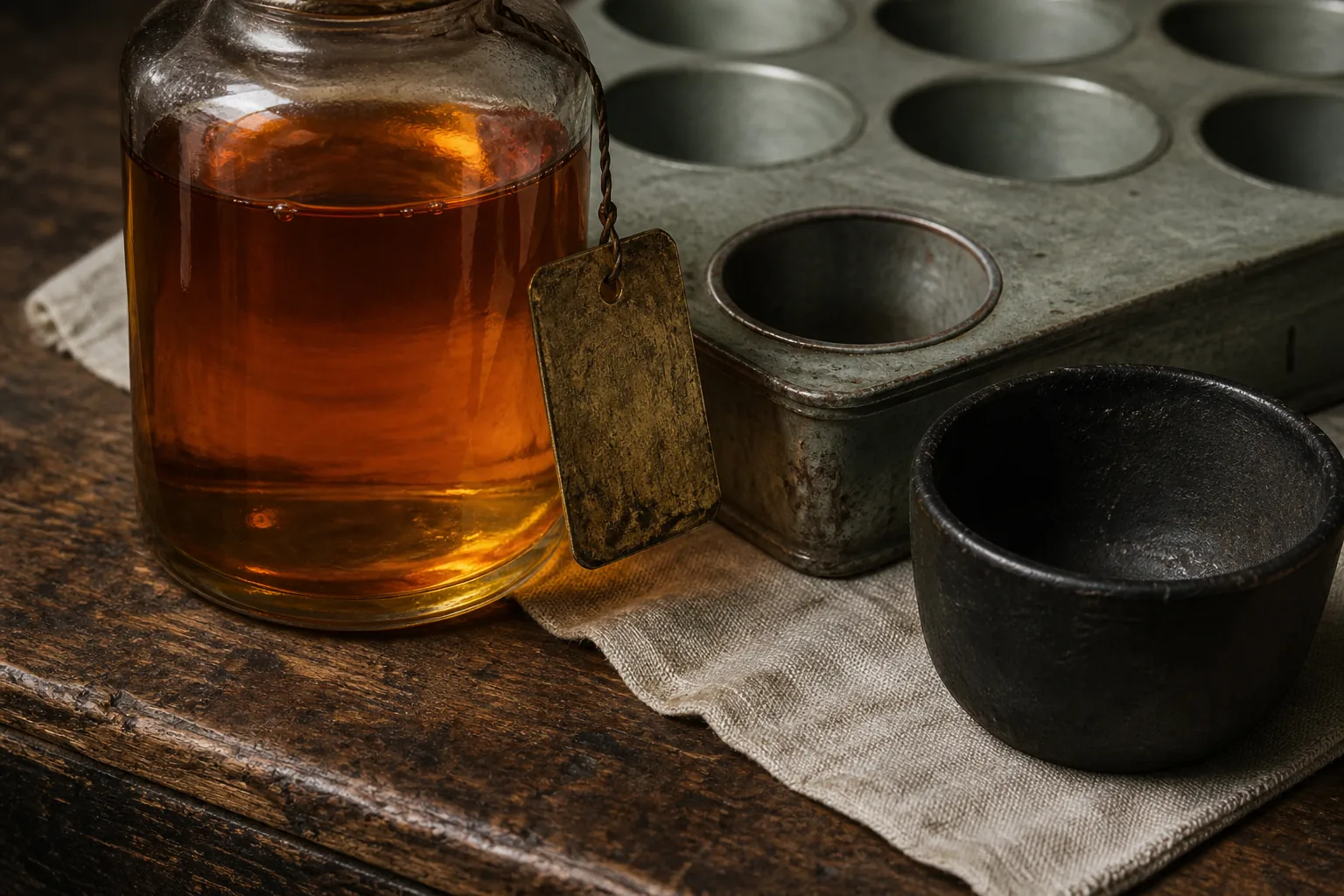
Thomas had brought the bottle because it was orange.
Not orange in the way wine people mean it, which is almost never the way a person means it at a hardware shop.
It was amber, cloudy at the shoulder, and appeared to contain a small weather system.
He set it beside the braised lamb with the expression of a man who has remembered an important rule in time to save dinner.
“Rich food,” he said. “Orange wine.”
Clara looked at the plate.
“What does the sauce taste like?”
Thomas glanced at it. The sauce was dark, glossy, and had the solemnity of something reduced on purpose.
“Rich.”
“Salt?”
“Probably.”
“Acid?”
“Clara.”
And that is the gap the whole rule falls into.
Because orange is not a food group. It is a production route.
A rich dish is not a food group either, although it has been trying very hard to become one.
Does Orange Wine Pair With Rich Food?
It can.
That is the boringly accurate answer, and it is also the useful one.
Orange wine is a white wine made with skin contact.
Light-skinned grapes sit on their skins instead of being pressed away from them, and the wine picks up more phenolic influence as a result: grip, bitterness, tactile drag, and savory, nutty, orange-peel notes.
None of which gives you an automatic answer to lamb, mushrooms, cream, duck, pork belly, cheese, butter, or anything a waiter has described as “quite unctuous.”
That word has done enough.
With a rich dish, fat and protein reduce the drying, bitter edge you feel from a structured wine.
It’s why some substantial wines feel more comfortable after a fatty bite.
It isn’t because tannin “cuts” fat, which makes tannin sound as though it has been issued a small blue apron.
But fat is only one part of your plate.
Salt makes tannin and acidity more noticeable. Umami-rich food makes a dry, high-tannin wine seem more bitter, more metallic and less fruity.
A slice of prosciutto is carrying salt, protein, fat and umami all at once.
A dash of soy can change your pairing more than another spice in the marinade.
Thomas tried the lamb, then the orange wine.
He stopped being pleased with himself at a rate that was almost technical.
“It is louder,” he said.
“Bitterer,” said Clara.
The bottle hadn’t become worse. The sauce had changed the terms.
That is less glamorous than saying the two had a difficult conversation. It is also exactly what happened.
So richness cuts both ways.
Where the useful part of your richness is fat and protein, it softens grip.
A dark red venison loin can be lean enough to offer no cushion at all.
Where the useful part is salt, soy, cured meat, aged cheese, mushroom, glaze or reduced stock, it exposes grip instead.
These aren’t rival theories. They are different plates wearing the same adjective.
Which makes the finished dish your only reliable pairing unit.
A lean chicken breast leaves firm tannin exposed. A fatty vegetarian pastry makes the same wine feel gentler.
Lean white meat and oily duck skin have not agreed to be classified by their color.
What Skin Contact Actually Adds to Wine
Thomas peered into the glass.
“It has texture.”
“Everything has texture.”
“This has wine texture.”
This was not wrong. It was merely not a sentence that could survive daylight.
Phenolic grip is the drying, bitter, tactile mouthfeel you get from extracted grape phenolics, and skin contact is the route to it here.
It also brings savory, nutty, orange-peel notes.
And it can make a dish with enough fat and protein feel more defined rather than simply heavy.
But the same mechanism has a second consequence.
Longer contact builds you more grip and more of those savory notes. It also amplifies bitterness, and it can bury fragile floral fruit.
Skin-contact times in orange wine run from a few days to around three months.
That’s a production range, not a promise that the darkest bottle will be your bravest companion at dinner.
The clock isn’t the whole record either. Fruit, temperature, cap work, pressing, oxygen and solids all affect color and tannin.
You can’t diagnose a wine from its hue any more confidently than Thomas could diagnose the sauce from its adjective.
What you actually want to know is specific. Which grapes. How long on skins. Whether fermentation happened on the skins. Whole bunch or destemmed.
What vessel.
“Orange, twenty-one days on skins, producer report” is useful because it says what is known.
“Amber and intriguing” is what happens when the record keeper leaves early.
Thomas took another bite, then another sip.
“The lamb is making it harsh.”
“The sauce is.”
This seemed an unnecessarily fussy distinction until he tried a piece of lamb without the sauce. Then it became merely annoying.
Why Color Is a Poor Pairing Rule
Color tells you something worth investigating.
It doesn’t finish the investigation.
Orange wine and rosé both involve skin contact, but they start from different grape colors and pursue different extractions.
Rosé takes a low-extraction route from black skins. Orange wine accepts more phenolic influence from light ones.
The relationship is mechanical. It isn’t a palette for choosing your dinner.
Color can’t report acidity to you. Or tannin. Or residual sugar, or alcohol, or pressure.
A skin-contact white that also has bubbles needs both descriptions, because it has committed the mild inconvenience of being more than one thing.
Sweetness declines to obey color too.
Dry, medium-dry, semi-sweet and sweet are measured bands of residual sugar, and where your wine falls has nothing to do with how amber it looks.
Even then, the acidity, the alcohol and the phenolic texture decide what that sugar actually feels like.
Clara moved the orange bottle away from the sauce and poured a lower-tannin, high-acid wine beside it.
Thomas regarded the second glass with suspicion.
“It is not orange.”
“That is observant.”
The point isn’t that color rules are always a disaster.
“White with fish, red with meat” works as a rough warning against forceful tannin beside delicate food. Butter-poached salmon will take a fuller wine than steamed sole will.
It becomes unhelpful the moment it replaces fat, sauce, salt, char, sweetness, acid and intensity.
The newer rule has exactly the same administrative appeal. One expressive color. One expressive plate.
Nobody has to ask what’s in the sauce, and the meal proceeds without interruption, except for the wine becoming oddly bitter halfway through.
How to Choose a Wine for a Rich Sauce
Start with the sauce. Not the protein, and certainly not the bottle’s social standing.
Is the richness mainly cream, butter, oil or succulent fat?
Then a wine with some structure will find that cushion, and a light neutral one may simply disappear into it.
Is it salt and umami, from soy, cured meat, mushroom, aged cheese or concentrated stock?
Then your dry, grippy wine is likely to pick up hard edges.
Is there a sharp element in there, a dressing or tomato or pickle or citrus?
A salad dressed with lemon is a different acid problem from the same leaves beside roast meat.
Is the sauce sweet? A spoonful of honey will make your wine seem less fruity, less sweet, more acidic, more bitter and more alcoholic.
This is not a request to conduct a municipal audit before dinner. It is four questions.
The sauce will answer them if you ask politely.
Then compare intensity one dimension at a time.
Do not solve a salty, umami-rich sauce by raising tannin, alcohol, oak, sweetness and body all together. That is not refinement.
That is changing the locks because a window sticks.
Pour 60 to 75 ml of the orange wine and the same amount of a lower-tannin, high-acid alternative.
Taste the finished sauce. Take each wine with the same bite.
Notice whether bitterness, dryness, fruit, acidity and weight become more balanced or more severe.
Keep the orange wine only if its grip stays useful instead of turning bitter on you after the sauce.
Thomas tried both glasses with the lamb.
The orange wine was still fascinating. It smelled of dried citrus, and of a cupboard where someone had been storing tea for years.
The other wine made the lamb taste more like lamb.
“So the orange wine is interesting,” he said.
“Yes.”
“And not useful.”
“Tonight.”
That last word matters.
Pairing gives you conditional results, not laws that overrule what you like.
The same wine can be spectacular with a fatty, lightly salted dish and awkward with that protein under a salty, umami-rich sauce.
The bottle hasn’t betrayed its color. The plate has supplied different evidence.
Thomas returned the orange wine to the center of the table, but not beside the lamb.
This was progress. He had not stopped liking it.
He had stopped assigning it a job it had never applied for.
Put it into practice
- Orange wine is made when light-skinned grapes receive skin contact, and the production record should state contact duration, fermentation-on-skins status, fruit handling, and vessel where known.
- Skin contact can add phenolic grip and savoury, nutty, or orange-peel-like notes, but longer contact can also amplify bitterness or obscure fragile floral fruit.
- Orange color does not report a wine's acidity, tannin, residual sugar, alcohol, or final pairing suitability.
- Salt and umami can make dry, high-tannin wine seem more bitter, metallic, less fruity, or more rough.
- The finished sauce, including salt, acidity, sweetness, fat, and umami, changes the pairing more than the protein name alone.
- A useful rich-food comparison changes one sensory dimension at a time and keeps the wine that remains balanced after the completed sauce.
Asked across the table
- Is orange wine always good with rich food?
- No. Orange wine can bring phenolic grip and savoury character from skin contact, but rich food is not one pairing category. Fat and protein may soften astringency, while salt and umami can make a dry, high-tannin wine seem rougher, more bitter, or less fruity. The finished sauce determines whether the wine's grip supports the dish or becomes an additional hard edge.
- What makes a wine orange?
- Orange wine is made when light-skinned grapes receive skin contact. A useful production record states the contact duration, whether fermentation occurs on skins, whole-bunch or destemmed handling when known, and the vessel. The OIV competition standard describes orange wine as a still white wine obtained with maceration. Its color is therefore evidence of a production route, not a complete flavor or pairing description.
- How long do orange wines stay on their skins?
- Skin-contact duration varies by producer and wine. WSET gives examples in a Friuli and Brda context ranging from a few days to 3 months. Duration alone does not predict the final wine because fruit, temperature, cap work, pressing, oxygen, solids, and vessel also affect extraction. A cellar record is more useful than an assumption made from amber color alone.
- Does orange color mean a wine is tannic or acidic?
- No. Color does not state a wine's tannin, acidity, residual sugar, alcohol, or pressure. Orange wine may have phenolic grip because light-skinned grapes are macerated, but its actual structure requires separate evidence. Residual sugar is measured in g/L, alcohol in % vol., total acidity in g/L with its stated acid equivalent, and pH separately. A color label cannot replace those values.
- Why can orange wine turn bitter beside a salty sauce?
- Salt can make a wine's acidity and tannin more noticeable, and umami-rich food can make a dry, high-tannin wine appear more bitter, metallic, and less fruity. Orange wine can carry phenolic grip from skin contact, so a salty or umami-rich sauce may expose that grip instead of making it feel useful. A less tannic, fruit-forward, higher-acid, or slightly sweet alternative can provide a better comparison.
- Does fat fix every tannic wine pairing?
- No. Fatty and protein-rich food commonly makes astringent red wine feel less drying and bitter, but salt, sweetness, pungency, vinegar, umami, and food intensity can still leave a wine out of balance. Fat does not remove tannin or guarantee that a wine remains fruity enough beside a dense sauce. The useful target is enough structure for the completed bite, not maximum tannin with maximum fat.
- Should a pairing be chosen from the meat or the sauce?
- The finished dish is the useful pairing unit. Fat, browning, cream, smoke, sauce, salt, sweetness, acidity, heat, and umami can change the appropriate wine more than the protein name. A lean chicken breast can leave firm tannin exposed, while a fatty vegetarian pastry can make the same wine seem gentler. The same protein can therefore require different wines under different sauces.
- What does dry mean for an orange wine?
- In the OIV competition standard, still orange and rosé wines are dry at no more than 4 g/L residual sugar, medium-dry at 4.1 to 12 g/L, semi-sweet at 12.1 to 45 g/L, and sweet above 45 g/L. These analytical bands do not settle perceived sweetness, because acidity, alcohol, and phenolic texture also change how dry or sweet a wine feels in the mouth.
- How should orange wine be tested with a rich sauce?
- A controlled comparison uses the finished sauce and changes one sensory dimension at a time. A 60 to 75 mL taste of orange wine can be compared with a lower-tannin, high-acid alternative after tasting the completed bite. The relevant observation is whether salt, umami, bitterness, acid, fruit, and texture become more balanced or more severe. Orange wine remains useful only when its grip does not turn bitter.
- Is a still orange wine the same thing as a sparkling orange wine?
- No. Still wine falls under 0.5 bar at 20 °C in the OIV competition standard, while semi-sparkling wine falls at 0.5 to 2.5 bar and fermented sparkling wine above 2.5 bar. Orange describes macerated light-skinned grapes; pressure describes another production and texture axis. A sparkling skin-contact white may require both descriptions because color and carbonation answer different questions.
- What should be recorded before calling an orange wine a good pairing?
- A useful record separates observed and documented facts. It includes light-skinned grapes with skin contact, contact duration, fermentation-on-skins status, handling and vessel when known; residual sugar, alcohol, total acidity, and pH when measured; and a tasting note for aroma, sweetness, acidity, phenolic grip, and finish. The finished dish's sauce, salt, fat, acid, sweetness, and umami then provide the pairing test.