Trust a more informed palate
Why a Wine Club Is Not a Cellar Plan
A club can create access, sociability and a pile of bottles with equal efficiency. Regional identity and connoisseurship do not replace a drinking plan or storage record.
Asserted
“The club allocation is limited, so taking all of it is sensible cellar building.”
Corrected
Wine culture's clubs and status signals meet appellations' regulated categories where belonging can make a place name feel like a buying decision although neither system decides quantity, storage, or use.
What to do
Before accepting an allocation, assign each bottle a drinking year and storage slot; decline any quantity that cannot be placed in a 12-month drinking or holding plan.
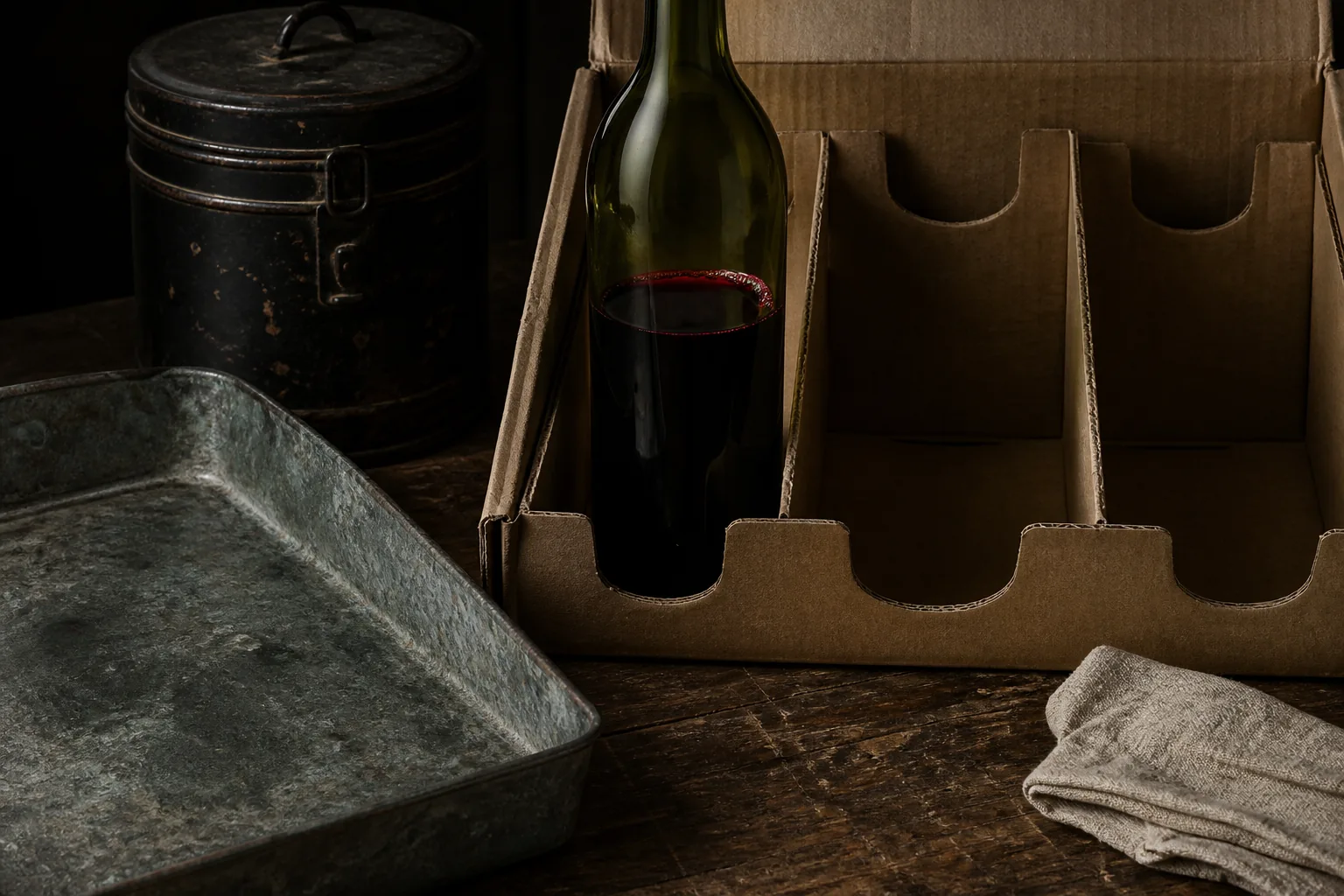
Thomas had received an email with a cream-colored border.
This wasn’t the point of the email. The point was that Thomas had been offered the allocation.
“All of it,” he said.
Clara looked at the screen.
“Where will it go?”
“In the cellar.”
“When will it be drunk?”
Thomas looked faintly betrayed by the second question. The cellar was downstairs. Surely that had answered both.
The email mentioned a named region often enough to make the hills appear upholstered. It mentioned membership, limited access and a growing list.
It did not mention the part of the house that already contained wine.
“It is an opportunity,” Thomas said.
“For what?”
A wine club will give you access, sociability, comparison and a pile of bottles with roughly equal efficiency.
The first three are useful. The fourth has no natural stopping point.
Does Joining a Wine Club Build a Better Cellar?
Wine is genuinely hard to judge at the moment you buy it.
You usually can’t taste it first. One bottle may have been stored quite differently from another carrying the identical label.
Temperature, food, glassware, company and everything you drank last year all move the result.
A few degrees can change what you find in the glass.
Which is why clubs, merchants, scores, maps, producer reputations and regional names exist at all.
They’re interpretive devices. They give you a defensible first choice while the liquid remains sealed and uncooperative.
A club also gives you repetition, and repetition is where the learning is.
Three pours in front of a group turn private impressions into a conversation.
One producer across four vintages, or two sites from one harvest, or one grape at different ripeness levels, gives you references instead of a single majestic opinion formed beside cheese.
That is real learning. It is not stock control.
The two subjects get introduced to each other as though they had met before.
A club sends you wine repeatedly. A cellar contains wine repeatedly. Therefore membership must be cellar building.
By that logic, anyone receiving a monthly library catalogue owns a library.
Thomas opened the allocation page.
“There are tasting notes.”
“There are always tasting notes.”
The spreadsheet contained purchase dates, labels and a category called “later.”
This was not a category. It was a small evacuation of responsibility.
Cellaring needs a memory. Notes, labels, receipts and records you can revisit after a year or after a decade.
It also needs each bottle to have an intended drinking year and an actual storage slot.
Without those, your collection can still be handsome. A drawer full of keys is handsome too.
It doesn’t mean anybody knows which door is being opened.
Membership itself comes in more than one shape.
A co-operative structure where you buy a lifetime share and get a vote is a genuinely different institution from a recurring shipment.
Ownership, selection, access and accountability are all arranged differently.
It still doesn’t tell you whether another bottle has somewhere to sit or an occasion to meet.
Why Allocation Scarcity Feels Like Value
Scarcity persuades because it is information wearing a better coat.
When you can’t independently assess quality, restricted access starts to look like evidence.
Small production, controlled allocations, old vintages and demand beyond supply all produce a limited offer.
A three-year waiting list says something precise. It records your position in a queue.
It does not say that every bottle on it is better than something you could buy this afternoon.
Less satisfying than the folklore, in which a waiting list is a small staircase to wisdom. More useful.
Signals can be genuinely costly to imitate.
A vertical collection needs a decade of storage. A rare bottle costs money.
A knowledgeable remark takes time and experience, though this has never stopped anybody attempting one near a decanter.
That cost supports a reasonable inference about commitment. It cannot convert the commitment into a drinking schedule.
“The allocation is limited,” Thomas said.
“So is the shelf.”
He hadn’t considered the shelf a participant in the discussion. It stood there in the next room, contributing nothing but physics.
Clubs are very good at coordinating attention.
A monthly group gathers contrasting responses. Eight people splitting a mixed case generate far more reference points each than eight identical purchases would.
Neither arrangement produces a universal verdict. Both make your next choice less blind.
That is the club’s proper glamour. It lowers the cost of learning.
One afternoon with a route, a guide or a regional association lets you choose among dozens of wineries. The shortcut helps you choose.
It doesn’t make every bottle you selected a future obligation.
The spreadsheet was less enchanted than the email.
It listed bottles already waiting for a drinking year, bottles without one, and bottles whose original purpose had apparently been “because the label looked extremely serious.”
Thomas scrolled with the expression of a man discovering that the cellar had kept minutes.
What a Regional Name Adds to the Offer
The place name in the email is a shortcut too, and it is a legal one.
An appellation regulates the truth of a named origin claim. It has real force, and it is checked.
What it doesn’t regulate is how many bottles you should buy. It also never promised you would enjoy the result.
Thomas pointed at the regional name.
“So it means something.”
“Yes.”
“Then I should take it.”
This was the moment at which a correct fact tried to become a bad conclusion.
A protected name is a conditional right of use, not private property belonging to a famous house or a club’s preferred producer.
It tells you what the wine had to be. It does not tell you what you have room for.
The region remained charming. The requirements remained literal. Thomas, however, had begun treating compliance as though it arrived with a fitted storage cabinet.
How Many Bottles Should You Buy?
Start with the boring answer, because the boring answer has the keys.
Buy only what you can assign a drinking year and a storage slot to before you pay.
Before you accept an allocation, put every bottle in it into a twelve-month drinking or holding plan.
If a bottle can’t be placed, decline it.
That isn’t a repudiation of the region, the club, or human joy.
It’s a refusal to let an email conduct your inventory by weather system.
Keep what a bottle claims separate from what it is for.
The claim is the appellation, the vintage and the producer.
The plan is where the bottle sits, when you intend to open it, and what is already occupying that role.
The appellation systems themselves are severe about exactly this separation.
A qualifying lot is tracked through crushing, fermentation, transfers, blending, maturation, bottling and inventory, and the books have to reconcile: grapes in, wine out, losses and stock accounted for.
Nobody is proposing an organoleptic examination of your shelf. That would be elaborate.
But the lesson survives the change of scale. A claim is not a feeling. It travels with records.
The club email can prove an offer exists. It can’t prove the bottle has a future in this particular cellar.
You have to make that connection before you buy, while declining is still a button rather than a system of shelves.
Thomas counted the bottles, the storage slots and the drinking years. Then he adjusted the allocation.
“The region is still excellent,” he said.
“It was never on trial.”
He looked mildly offended by the spreadsheet. This was fair.
It had taken a few minutes to settle a question that scarcity had been performing for much longer.
The club could still send the invitation. The place name could still mean exactly what it meant.
But access is not a plan.
It is the part before one.
Put it into practice
- A wine club can supply access, curation, repeated comparison and peer learning without supplying a cellar plan.
- A waiting list or allocation signals controlled access and queue position, not a universal judgment of bottle quality.
- A cellar record of notes, labels, receipts and dates makes future buying and condition checks possible.
- A co-operative membership share carrying governance rights is a different institution from a recurring commercial shipment.
- A bottle needs an intended drinking year and a physical storage slot assigned before purchase rather than after delivery.
- Protected appellation names are conditional rights of use supported by records, controls and label rules rather than ownership or rank.
Asked across the table
- Does joining a wine club build a better cellar?
- A wine club can provide recurring access, curation, tastings, allocations and opportunities to compare notes, but it does not itself establish what a cellar needs. A useful cellar depends on documented bottles, intended drinking periods, storage capacity and actual use. Membership can make exploration more economical and sociable; it cannot decide whether an incoming quantity duplicates bottles already waiting for the same occasion.
- Does a wine-club waiting list prove that the wine is good?
- No. A waiting list records controlled access and queue position, not a universal quality verdict. A 3-year waiting list can arise because production is small, distribution is restricted, allocations are controlled or demand exceeds supply. Scarcity can be a useful signal of commitment or demand, but it does not prove that every allocated bottle suits every drinker or every cellar.
- Why do wine-club allocations feel so hard to decline?
- Allocations combine scarcity, membership and regional identity into a status signal. Access can imply affiliation when a buyer cannot independently assess a bottle before purchase. A rare bottle, a vertical collection requiring 10 years of storage, or an invitation to an allocation can signal resources and commitment. Those inputs may be real, but they are not the same evidence as a drinking plan or a record of available storage.
- What should be recorded before accepting a club allocation?
- Each proposed bottle needs a drinking year, a storage slot and a reason for holding it. Notes, labels, receipts and purchase dates create a memory archive that supports later buying decisions and condition checks after 12 months or 12 years. An allocation that cannot be placed in a 12-month drinking or holding plan remains an offer, not a cellar necessity.
- Why is a club's regional theme not a cellar strategy?
- Because regional belonging is a selection principle, not a drinking plan. A club organized around one region can supply coherent, well-chosen bottles and still leave a member with wine that has no intended drinking year and no storage slot. Coherence on the shelf and coherence in a plan are different properties, and only one of them is decided at the moment of purchase.
- Does club membership improve the wines a member can buy?
- It can improve access and it can improve information. It cannot change the wine. A club lowers the cost of learning by supplying comparison, repetition and a defensible first choice while the liquid is still sealed and uncooperative. Those are real benefits, and none of them is the same as the bottle being better than an alternative available that afternoon.
- What does a co-operative club structure change?
- It changes ownership, governance and accountability rather than the contents of the case. A member who buys a lifetime share and holds a vote is in a different institutional relationship from a subscriber to a recurring shipment. That difference is worth knowing before joining. It still says nothing about whether the next allocation has anywhere to go.
- Is a club shipment a reasonable way to learn about wine?
- Yes, and that is its strongest claim. A group comparing several pours turns private impressions into a conversation, and one producer across several vintages supplies references rather than a single opinion formed beside cheese. The learning is genuine. It is a separate question from how many bottles should enter the house.
- Should a club allocation be declined if it cannot be placed?
- Yes. A bottle that cannot be given a drinking year and a storage slot before purchase is inventory without a purpose. Declining is one decision made while it is still a button; accepting converts it into a system of shelves, a storage requirement and a future question about what the bottle was for. The region is not on trial when an allocation is refused.
- How should a club collection be recorded?
- Each bottle needs a unique identifier, its identity fields, format, purchase source and date, physical location, status and any condition note, together with the intended drinking year. A physical address lets another person retrieve the bottle without interpreting a description. Every receipt, move, consumption, breakage and sale updates the record the same day.
- Does a long waiting list indicate a better wine?
- No. It records a queue position and demonstrates demand for a limited offer at a moment in time. Restricted access can be a costly signal, and costly signals support an inference about commitment rather than about the contents of the bottle. Scarcity is information about supply, and it should not be read as a verdict on quality.
- Can a club describe a wine online with a place name that is not on the label?
- For Ontario VQA wine, advertising and online descriptions may not use a term that the wine does not qualify to use on its label. The front-label origin claim and wider sales language must therefore remain consistent. More generally, an appellation is a conditional right of use: a producer or seller may use the protected name only when the wine meets the applicable specification and supporting records.