Know what you’re choosing
Why a Distillery Name Is Not a Whisky Production Method
A distillery can imply house character while still making spirits through different grains, casks, ages and ownership arrangements. The name on the label is a starting clue, not the whole recipe.
Asserted
“It is from that distillery, so I already know what it will taste like.”
Corrected
Distilleries' house-character and ownership distinctions meet whisky's grain, cask and age rules where a familiar producer name cannot substitute for the production facts of a specific bottling.
What to do
Compare two bottlings from the same distillery at a similar age with the cask treatment stated on both; decide on the bottling details, not only the distillery name.
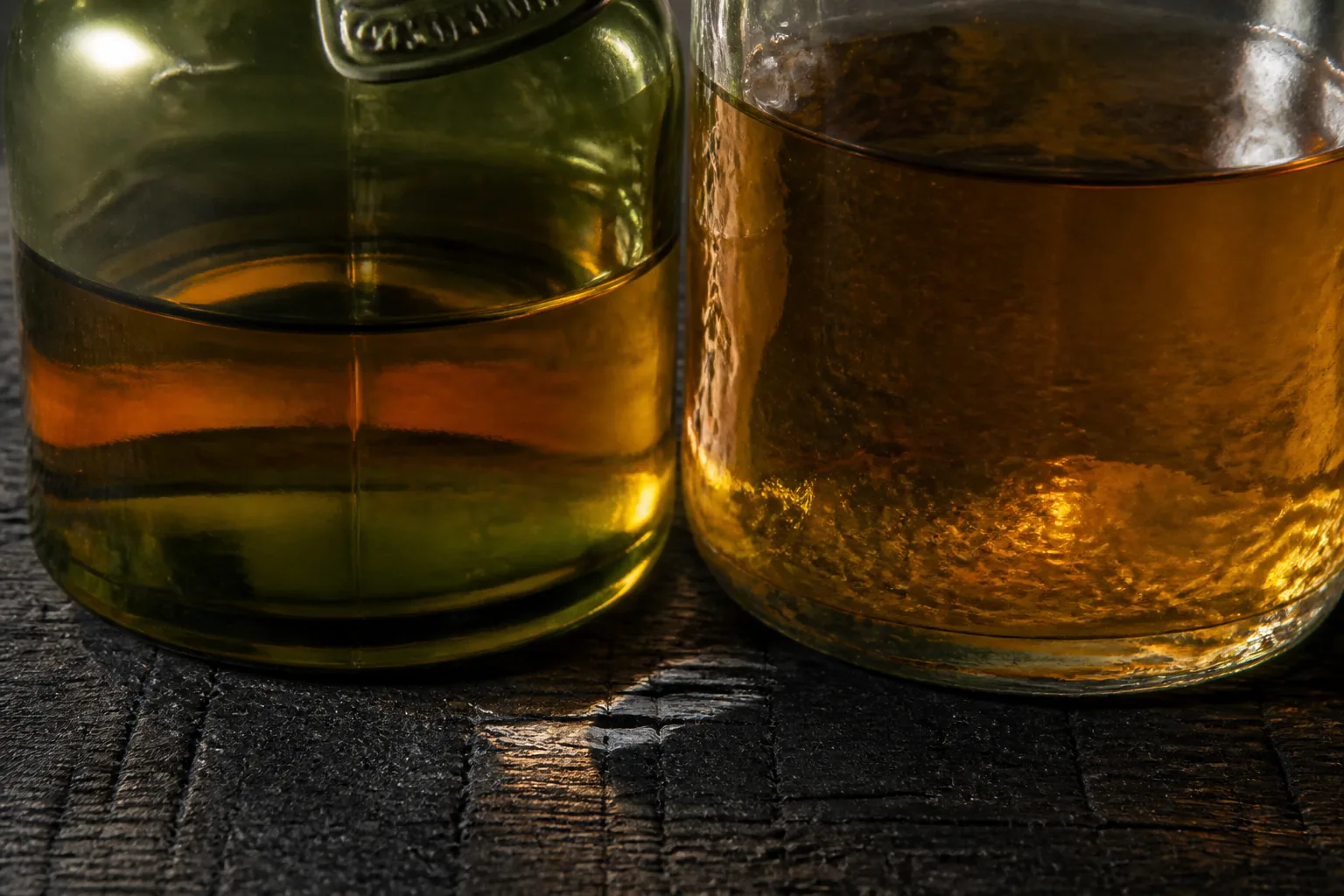
Thomas had found a bottle from a distillery he knew.
He stopped reading there.
The label carried an age statement, a cask description, a strength, a bottler’s name, and the sort of type that looks faintly embarrassed to be useful.
Thomas had passed over all of it with the confidence of a man recognizing a railway station.
“It is from Glen Something,” he said. “I know the style.”
Clara took the bottle from him.
“Which cask policy?”
Thomas looked at the label as though it had introduced a new subject without permission.
“The distillery’s.”
“That is not a cask policy.”
This was received badly.
The distillery name was large. The other words were small. Typography had made a promise it was not technically authorized to make.
Because a distillery name is useful.
It tells you a site, a still regime, a repeatable new-make profile, sometimes a protected regional claim. It’s a beginning.
It is not the recipe.
Your whisky has had opportunities.
Grain, fermentation, distillation, cut points, filling regime, cask selection, warehouse, blending, dilution, filtration and bottling strength have all been allowed into the room.
By the time it reaches your glass, the distillery may be the most famous fact about it.
Famous is not the same as explanatory.
Does a Distillery Name Tell You How Whisky Will Taste?
It tells you something. That needs saying before the correction starts sounding theatrical.
House character is best understood as the repeatability of a site’s new-make profile under chosen conditions.
Inputs, fermentation, still design, reflux, cut points, spirit strength and filling regime make that profile. A pot still is part of one story.
A column still is part of another.
Neither is a decorative kettle installed to give a tour guide somewhere to point.
Batch pot distillation works in discrete charges. A continuous column runs an ongoing counter-current process.
What actually differs is the charge or flow rate, the number of stages, the output strength, the heat source, the cleaning schedule and the operator’s normal range.
That’s machinery, not a personality quiz for you to score. Pot doesn’t mean noble. Column doesn’t mean vacant.
For Scotch, single malt has to be batch-distilled in pot stills, while single grain can include other cereals. Both can be single-distillery products.
That’s a category boundary. It isn’t permission to predict every finished single malt from the word malt.
Clara put the official bottle beside an independent one from the same distillery.
“There,” Thomas said. “Same answer twice.”
“Read them.”
The name on each bottle had done its useful work. It told you they shared a source.
The rest of the label began the actual comparison.
A sensible record of house character gives you four layers. New make. Maturation policy. Blending policy. Bottling policy.
A ten-year-old release tasted without cask data is a finished product, not a clear audition of the stillhouse.
New make has the opposite problem: it tells you very little about what a long active cask will do to it.
The difference stops being subtle once you name it.
A distillery can make peated and unpeated batches, use different cuts, or run several still types.
One smoky bottling is an observation about that bottling.
It isn’t a smoke alarm installed above the town.
House character is real. It just has rooms.
What Grain and Cask Policy Change
Thomas had now located the word barley and looked relieved.
“There,” he said. “That is the method.”
“That is one material,” Clara said.
Grain rules are especially good at making a label look more complete to you than it is.
Bourbon and rye each require at least 51% of the named grain. That’s a legal floor. It isn’t your mash bill.
“Corn-majority” and “rye-majority” are useful descriptions. “It therefore tastes sweet” and “it therefore tastes spicy” are small acts of fiction with a handsome label.
Scotch single malt is malted barley only.
Irish pot still whiskey has a different constitution again, built from a required proportion of both malted and unmalted barley.
Those are category facts. A producer’s published mash bill is a stronger kind of fact, and you should prefer it.
“Wheated” and “high-rye” are not percentages in a trench coat. Where no numeric recipe is published, the honest word is undisclosed.
A flavor inference is not a mash bill, however many reviewers have agreed to call it one.
Then comes the wood, where you are routinely asked to accept a noun as your explanation.
“Sherry cask,” Thomas read.
“For how long?” Clara said.
This seemed fussy until it became unavoidable.
The regimes are structural, and they bound what you can be sold.
Scotch and Irish whiskey both mature in casks of limited size for a minimum of three years, and both may use casks that previously held something else.
Bourbon and rye require charred new oak at entry.
Inside those rules, first-fill or refill status, char level, stave history, prior contents, warehouse climate, fill strength and time all change your bottle.
New charred oak delivers caramelized-wood notes quickly. A refill cask leaves more of the distillate visible.
Neither result is more sincere to you. One simply gives the cask more of the microphone.
The word finish also needs a chronology.
A six-month finish and a twelve-year full-term maturation cannot be treated as the same evidence because both labels say wine cask.
Ask what came first, what came later, and for how long. Less poetic than an orchard in October. Also what the bottle means.
Thomas held the independent bottle nearer the lamp.
“This one is darker.”
“Color is having a very easy day,” Clara said.
How Independent Bottlings Differ
An official release and an independent bottling can share a distillery and still be entirely different propositions.
They can differ in cask, age, strength, finishing, dilution, filtration, color statement, bottle count and selection objective.
The independent bottler hasn’t necessarily revealed a secret version of the distillery. It may simply have chosen one parcel for one result.
The supply behind your bottle is often private and long-term.
Blenders contract with distilleries years ahead, and maturing casks trade by contract rather than on any open market.
That makes access a commercial fact. It is not a quality ranking you can read off the shelf. Romance has entered a great many warehouses. Contracts have entered more.
So start your comparison with the label data.
Distillation year. Bottling year. Declared age. Cask type. Strength. Bottle count. Bottler. Filtration and color claims.
Then compare aroma and palate, in the same market, on the same date.
Starting from “official” or “independent” merely tells your conclusion where to sit before the evidence turns up.
Clara turned the independent label around.
“This has the distillation year, the bottling year, the cask, and the ABV.”
Thomas nodded slowly.
“Inconveniently specific.”
Exactly.
Compare two bottlings from the same distillery, at a similar age, with the cask treatment stated on both.
Then let the conclusion belong to those two bottles.
It doesn’t immediately expand to the whole distillery, every official release, or the entire independent-bottling trade, which has been waiting patiently for somebody to generalize it into a slogan.
Ownership complicates the story without destroying it.
A stillhouse, a warehouse, a bottler and a brand owner can be connected without being the same facility or the same legal entity.
A three-site chain is entirely ordinary.
A licensed warehouse may bottle, fill, rack, blend and reduce spirit. That permission doesn’t establish who distilled it.
Nor does the word blend erase selection. Blended Scotch combines single malt with single grain. Blended malt combines only single malts.
A blender may be working with dozens of component whiskies, and neither term reports the percentages unless somebody discloses them.
Repeatability can be the whole point of that architecture, and it may be exactly what you want. A single cask isn’t automatically braver. It’s a narrower source condition.
Read the bottle as a relationship map. Distillery source. Bottler. Brand. Cask or parcel. Date.
A good name is a clue. It’s not a substitute for the map.
How to Read a Whisky Label Beyond the Distillery
By now Thomas had become suspicious of the label.
This was an improvement. Suspicion isn’t ignorance with better tailoring. It’s the moment before somebody reads the small print.
Start with the category claim, and notice that the categories promise you different things.
Scotch and Irish Whiskey are geographic specifications. Bourbon and rye are production types. Qualifying Japanese whisky rests on a defined labeling standard.
Scotch requires three years of maturation in Scotland. Bourbon requires charred new oak and no minimum time at all, unless a further designation applies.
Then read grain as either a rule or a disclosure, and never both by accident.
Read cask language as a sequence. Wood. Previous contents, where they can be substantiated. New or used. Primary maturation. Finish. Duration.
A cask name with no chronology is a clue with its shoes untied.
Read the age correctly, too, because it is not telling you what you think.
An age statement is cask time after distillation and before bottling, and it names the youngest whisky in there.
It gives you a lower bound.
It does not identify the cask mix, the oldest component, or a universal summit of wisdom.
Then the strength.
Taste each bottle at its intended strength first.
A 40% bottling and a cask-strength bottling are two different serving conditions, and the stronger one has not won by arriving with more of itself.
If dilution matters to your comparison, add measured water afterwards.
Thomas poured the official whisky.
Then the independent one.
He read the two labels again. The shared distillery name was still there, large and reassuring.
But one had been aged in one cask regime, at one strength, for one stated period, chosen by one bottler.
The other had made several different arrangements.
“So the distillery tells me where to start,” he said.
“Yes.”
“And the bottle tells me what I have.”
Clara nodded.
The house was still standing.
It simply turned out to contain more doors than the nameplate admitted.
Put it into practice
- A distillery name can suggest a repeatable new-make profile but cannot describe every finished release.
- Pot and column still regimes constrain production differently without creating a universal quality or flavor ranking.
- A whisky category's grain minimum is not the same thing as a producer-disclosed complete mash bill.
- Cask claims need a chronology: wood, prior contents, new or used status, primary maturation, finish, and duration.
- An age statement describes the youngest component's time in cask after distillation and before bottling, not bottle age.
- Official and independent bottlings from one distillery can differ in cask, age, strength, finishing, dilution, and selection objective.
- A bottling, warehouse, brand owner, and distillery can be separate facilities or entities without erasing provenance.
Asked across the table
- Does a distillery name tell what a whisky will taste like?
- A distillery name can identify a production site and may suggest a repeatable new-make profile under chosen conditions, but it does not describe every finished whisky. Fermentation, still design, reflux, cut points, filling regime, cask selection, maturation location, blending, dilution, and filtration can change the bottled result. A finished bottle is evidence about that release, not a complete reading of the stillhouse.
- What does house character actually mean in whisky?
- House character is most useful as the repeatability of a site's new-make profile across stated production conditions. It is not a permanent flavor essence attached to a building name. Production evidence, an official sensory description, and an independent tasting observation are separate kinds of evidence; a smoky note on one 46% ABV bottling does not measure every whisky made at that distillery.
- Does a pot still automatically make a better or heavier whisky?
- No. Batch pot distillation and continuous column distillation manage separation, contact, and operating rhythm differently. Scotch single malt must be batch-distilled in pot stills, while single grain can include other cereals, but the category boundary does not settle the sensory result of a particular bottle. Actual output strength, cuts, fermentation, cask treatment, and bottling choices still need separate evidence.
- Can the grain be known from the whisky type on the label?
- Sometimes only partly. Bourbon and rye each require at least 51% of their named grain, which establishes a category floor rather than a complete recipe. Scotch single malt is malted barley only, while Irish pot still whiskey requires at least 30% malted barley and 30% unmalted barley, with up to 5% other unmalted cereals. A complete mash bill requires a producer disclosure.
- Why is a sherry-cask label not enough information?
- A sherry-cask claim can describe full primary maturation, a later finish, a cask's previous contents, or only product language. The useful record states the wood, whether the cask is new or used, its prior contents where substantiated, the sequence of maturation and finishing, and each duration. A 6-month finish and a 12-year full-term ex-wine maturation are not equivalent evidence.
- What does a whisky age statement actually measure?
- A whisky age statement measures time in cask after distillation and before bottling; it does not measure time in bottle or a universal level of maturity. It normally states the youngest relevant component. Irish labeling guidance likewise requires any stated age or maturation period to name the youngest whiskey's age in years, so an older component cannot silently replace the declared number.
- Does an independent bottling come from the named distillery?
- An independent bottling can share the named distillery source with an official release while differing in cask, age, strength, finishing, dilution, and selection objective. Source disclosure should be read with the bottler, cask or parcel identifier, distillation year, bottling year, ABV, bottle count, and filtration or color claims. An undisclosed source is not automatically inferior, but it provides less specific provenance.
- Why can two whiskies from the same distillery taste so different?
- Two whiskies from the same distillery can differ because the finished profile is shaped after new make as well as before it. First-fill or refill status, char level, stave history, prior contents, warehouse climate, fill strength, time, blending, dilution, and bottling strength all change the result. The distillery is one source condition; the specific cask and bottling policy are additional production facts.
- Does a different bottling company mean the whisky has lost its provenance?
- No. Distillation, warehousing, bottling, and brand ownership can be separate operations. In the United Kingdom, approved excise warehouses may bottle, reduce, fill, rack, blend, and make bulk removals, and that permission does not establish who distilled the spirit. Provenance remains clearer when the label or record distinguishes the distillery, bottler, warehouse, brand owner, and any source disclosure.
- How can two bottlings from one distillery be compared fairly?
- A useful matched set begins with two bottlings from the same distillery in a similar age range and with clearly stated cask treatment. The comparison records category, grain claim, age, cask chronology, ABV, bottler, and dilution or filtration information before drawing sensory conclusions. Serving both at the same volume, temperature, glass, and dilution practice keeps setup from becoming the hidden difference.
- Is cask strength automatically better than a standard bottling?
- No. Bottling strength changes concentration and dilution options, not quality by itself. Scotch, Irish, Japanese, and United States whisky definitions or standards use a 40% ABV floor, while a higher-strength release can give a drinker room to add measured water. Comparing a 40% bottling with a 58% cask-strength bottling without considering dilution mainly compares intensity.