Understand the craft
Why a Big Red Makes Chile Hotter, Not Braver
Pepper aroma and chile burn are not the same thing, however often a menu calls both spice. High alcohol and tannin can make the second one worse.
Asserted
“The curry is spicy, so it needs the biggest red I own.”
Corrected
Pairing's distinction between aromatic spice and chile burn meets beer's bitterness, carbonation and alcohol axes when a chilled beer can soften a chile-led bite that a powerful red amplifies.
What to do
For a dish led by fresh or dried chile, start with a chilled, lower-alcohol beer and avoid high-tannin wine; test one 30 to 50 mL sip against the finished sauce.
Thomas had brought the pepper mill to the table.
It was the sort with a little brass collar and a grinding mechanism that sounded expensive when used with sufficient conviction.
He had set it beside the curry as evidence.
“Pepper,” he said. “Spice. Big red.”
Clara looked at the sauce, which contained enough fresh chile to make the surface appear faintly insurgent.
“How much of the heat is from the pepper mill?”
Thomas considered this as one considers a tax question designed by someone else.
“There is pepper in it.”
“That was not the question.”
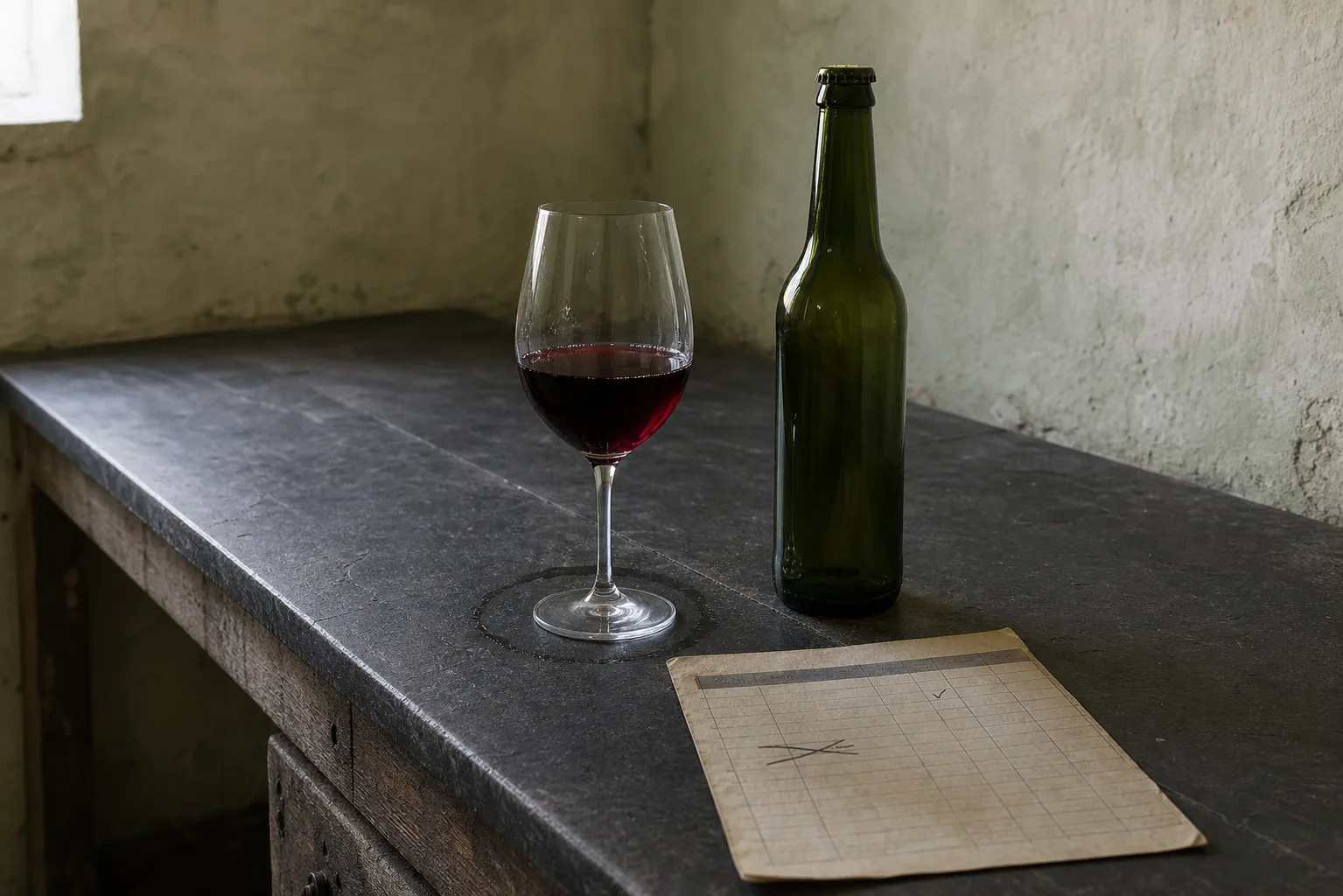
The bottle was a 13.5% red, firmly tannic. This was not a moral failure. It was a bad application of confidence.
“It has pepper notes,” Thomas said.
“Does the sauce?”
And that is the question the whole meal turns on.
Because spice is a word that has ruined a great deal of useful advice.
It covers black-pepper aroma, toasted cumin, smoke, clove, coriander, cardamom and chile burn, then asks one bottle to deal with all of them.
Your wine can smell of black pepper without being hot.
Your dish can be hot without smelling remotely of pepper.
They meet on a menu and are introduced as cousins. This is administratively convenient. It is not sensory analysis.
Why Does Red Wine Make Spicy Food Taste Hotter?
Chile heat and high alcohol compound each other. Firm tannin adds a drying roughness on top.
A very dry wine can make a hot sauce seem hotter still.
So your big red does not prove its seriousness by standing up to the curry.
It stands there making the curry more alarming.
This is not an objection to red wine beside seasoned food generally.
If your dish leads with a black-pepper crust, a peppery red makes obvious sense. Savory grilled food and a savory red can be lovely.
But a high-alcohol, high-tannin red beside a genuinely chile-led sauce is a different experiment, whatever the shared word suggests.
The first is an aromatic echo.
The second adds warmth and astringency to a bite that already burns.
They are not natural diplomats.
Thomas tasted the sauce, then the wine.
He paused in a dignified way, which is to say he stopped moving for long enough that nobody had to mention it.
“It is more vivid,” he said.
“Hotter,” said Clara.
The correction here isn’t that chile needs sweetness, or that red wine has been banned from the continent.
It’s that you have to work out what leads the bite.
Mildly seasoned grilled meat will take tannin. The same meat under a sweet-hot sauce will not.
Once dried chile is doing the talking, you will usually get further with a chilled, lower-alcohol, low-tannin wine carrying some fruit than with anything powerful and austere.
Food changes your perception. It does not alter the bottle’s analysis.
That distinction is less romantic than saying the Syrah has entered into dialogue with the mole. It is also more useful.
Alcohol warmth, drying tannin, acidity, sweetness and fruit all arrive after the sauce has set your reference point. The wine has not become cruel.
Your mouth has changed the terms of the meeting.
There was a small silence around this idea.
Thomas regarded the pepper mill as though it had failed to disclose a relevant conflict of interest.
Pepper Aroma Is Not Chile Burn
Aroma is the part of the experience that makes you say a wine smells of pepper, toast, smoke, basil or mushroom.
Chile burn is not an aroma that has become assertive through good posture.
It is a different stimulus entirely.
Which is why an aromatic wine can echo the coriander, fennel, cardamom or clove in a dish with very little chile in it, while a chile-led dish usually wants softness rather than alcoholic force.
The distinction matters most when a recipe gets reduced to a nationality.
“It’s Thai,” “it’s Mexican,” “it’s Indian,” Thomas said, making all three sound like reasons to buy the same red.
None of those describes your sauce.
A restaurant version swimming in hot sauce is a different pairing problem from one built on toasted spice, pepper aroma and almost no chile.
Geography gives you traditions and a plausible first thought.
It has not tasted your finished dish.
Heat isn’t the only thing in there, either.
Sugar exposes a dry wine’s acid, bitterness and alcohol.
A dash of soy can change the pairing more than a second dried spice in the marinade.
So the useful question is not whether a cuisine is “spicy.”
It is whether this bite is hot, salty, sweet, sour, fatty, smoky, bitter or umami-rich, and which of those is doing the shouting.
Thomas put the pepper mill down.
“So it is not pepper.”
“It is pepper too.”
This seemed an unnecessarily exacting universe.
Which Beer Styles Work With Chile-Led Food?
The first beer rule is almost as simple as the first wine rule. Compare structure, not branding.
Start chilled and lower in alcohol. Look for enough fruit or residual sweetness that you aren’t adding another hard edge.
Then ask separately about bitterness and carbonation.
Beer is not a small, cheerful category labeled “refreshment.” It is a collection of ways to be sweet, dry, bitter, soft, fruity, carbonated, warm or roast-led, sometimes all at once, sometimes before lunch.
Alcohol matters here, but it will not answer the question by itself.
Two beers at the same strength can be sharply attenuated and dry, or rich with residual extract.
A session category gives you a sensible direction; it does not tell you that two beers of identical strength won’t differ enormously in body, carbonation and bitterness over a second glass.
Lower alcohol is a useful filter. It is not a personality test.
Clara returned with a cold beer.
Thomas looked at it.
“That is theatrical.”
“It is cold.”
The beer you want need not be sweet, and it need not be bland.
A clean lager clears a stage for malt and hops.
A beer with expressive yeast brings fruity or spicy character of its own.
A pale base malt makes hop aroma more conspicuous.
A roast grain can supply coffee or cocoa impressions, and can add astringency when it is poorly integrated.
With chile already leading the sensation, you do not need an accompaniment that mistakes roughness for authority.
So let a style name open your inquiry rather than end it.
A Belgian-style tripel is strong and carries spicy, estery yeast character. It can be a lovely beer.
It is not the automatic answer to a hot curry because the word spicy is loitering nearby.
A hazy strong pale ale may give you a softer bitter impression through hop aroma and fuller texture.
That depends on the actual beer, not on the adjective hazy doing community service.
Thomas took a bite, then a sip of the cold beer.
He did not reach for water.
This was persuasive in a way that several paragraphs of warning had not been.
How Cold and How Bitter Should the Beer Be?
Cold is not the same as bitter.
Carbonation is not another name for either.
Balance is the relationship among flavor, aroma, body, alcohol, acidity, bitterness and carbonation. It is not the absence of intensity.
A cold beer can feel refreshing and still be very bitter.
A softly bitter beer can be heavily carbonated.
You have more axes to judge than the advertisement has room for.
The bitterness figure on your beer is a method-defined result, not a taste score.
Brewing guidelines caution outright that perceived bitterness can differ significantly from the measured value, which is why two beers with the same number can feel differently sharp.
Finishing gravity, hop timing and yeast-derived fruitiness all intervene.
Numbers are useful.
They are not tiny judges in black robes.
The same care applies to anything described as “hoppy.” Hops added early in the boil favor bitterness; later additions preserve aroma instead.
Very high hop loads and long contact with the beer can bring astringency and heat of their own.
Which makes the practical move refreshingly ungrand.
Skip the high-tannin wine.
Pour yourself a chilled, lower-alcohol beer.
Then take one 30 to 50 ml sip against the finished sauce, not against an abstract curry.
Notice whether the beer makes the burn, the dryness or the bitter edge louder.
Notice whether fruit, residual sweetness and carbonation make the next bite easier to face.
If it doesn’t, change one axis at a time.
Do not escalate to a beer that looks as though it has been conditioned by artillery.
“The beer was not a retreat,” Thomas said.
“No.”
“The wine was making the sauce worse.”
“Yes.”
He looked toward the red, which had done nothing except arrive with the wrong assignment.
The beer was cold. The chile was still chile.
The difference was that neither had decided to make the other prove a point.
Put it into practice
- High alcohol and firm tannin can compound chile burn and drying roughness.
- Black-pepper aroma, aromatic spice and chile burn require separate pairing decisions.
- Measured IBU does not directly predict perceived bitterness because sweetness, carbonation, acidity, alcohol and aroma affect it.
- A chilled, lower-alcohol beer with some fruit or residual sweetness can be gentler with chile-led food than a powerful red.
- The finished sauce or garnish, rather than a cuisine label, determines the useful pairing trial.
- Carbonation is one sensory axis among several and is not a synonym for bitterness.
Asked across the table
- Why does a big red make chile food taste hotter?
- Chile heat and high alcohol can compound a burning impression, while firm tannin adds drying roughness. A very dry wine can also make a spicy sauce seem hotter. A powerful, high-tannin red may therefore make a chile-led bite feel more fiery and less comfortable rather than balancing it. Fruit, lower tannin, moderate alcohol and sometimes some sweetness usually offer a gentler direction.
- Is black pepper the same kind of spice as chile?
- No. Black-pepper aroma, toasted spice, smoke and chile burn are different stimuli. A wine with a peppery aroma can suit a black-pepper crust, while a high-alcohol, high-tannin red can make fresh chile feel more fiery and drying. Pairing works better when the source of pungency is named: aromatic spice can be echoed, but chile burn usually calls for softer structure.
- What beer works best when the sauce has a lot of chile?
- A chilled, lower-alcohol beer is a sensible starting direction for a chile-led sauce. Residual sweetness or fruit can make the pairing more forgiving, but the beer should also be judged for its bitterness, carbonation, acidity, body and finish. The useful choice is not a universal beer style; it is the beer whose structure does not add alcohol heat, drying roughness or excessive bitter sharpness.
- Does a lower IBU beer always taste less bitter?
- No. IBU is a method-defined analytical result, not a direct sensory score. Residual sweetness, acidity, carbonation, ethanol, polyphenols, hop aroma and expectation all affect perceived bitterness. A juicy or hazy IPA in the Brewers Association's 20 to 50 IBU range can taste less sharply bitter than another beer at a similar number because its texture, finish and hop expression differ.
- Is carbonation just another way of saying bitterness?
- No. Carbonation and bitterness are separate sensory variables. Beer balance includes flavor, aroma, body, alcohol, acidity, bitterness and carbonation; changing one does not state the level of the others. Carbonation can alter the apparent body and the perception of bitterness, but a beer's IBU result remains a distinct analytical measurement rather than a measure of its fizz.
- Can a peppery red still work with a spicy dish?
- It can work when the dish is led by pepper aroma, toasted spice, smoke or grilled savouriness rather than substantial chile burn. A peppery aroma in wine can echo a black-pepper crust without reproducing heat. The same red becomes a risk when the sauce is chile-led, because high alcohol and firm tannin can make the burn feel hotter and drier.
- Should the pairing be chosen from the name of the cuisine?
- No. The useful pairing unit is the finished dish, including sauce, garnish, cooking method, salt, sweetness, acidity and heat. A restaurant version using 20 mL hot sauce creates a different problem from a milder version of the same named dish. Geographic tradition can provide a plausible starting idea, but it does not replace a tasting trial of the actual preparation.
- What does a 50 IBU label actually tell a diner?
- It records a bitterness result only when the method and sample context are known; it does not settle how bitter the beer will taste. A 50 IBU American-style IPA and a 50 IBU juicy IPA can differ in apparent sharpness because finishing gravity, hop timing and yeast-derived fruitiness differ. The label is useful evidence, but it requires the beer's finish, sweetness and carbonation alongside it.
- Is a strong beer automatically too much for chile food?
- No. ABV signals strength, but it does not by itself predict sweetness, body or perceived bitterness. Two beers at 7.0% ABV can be dry and sharply attenuated or rich with residual extract. With chile-led food, alcohol warmth remains a risk, so the beer should be evaluated for its actual alcohol, finish, bitterness, carbonation and fruit rather than accepted or rejected by strength alone.
- How should a beer or wine be tested with a spicy sauce?
- The comparison should use the finished sauce or bite, not the cuisine label or an unseasoned base ingredient. A 30 to 50 mL sample provides a controlled first trial: taste the sauce, take the sip, then notice whether burn, dryness, bitterness, fruit and refreshment change. A choice that works with the base curry can fail after fresh chile, hot sauce or a sweet-hot glaze is added.